
What does it mean to be ‘qualified’?
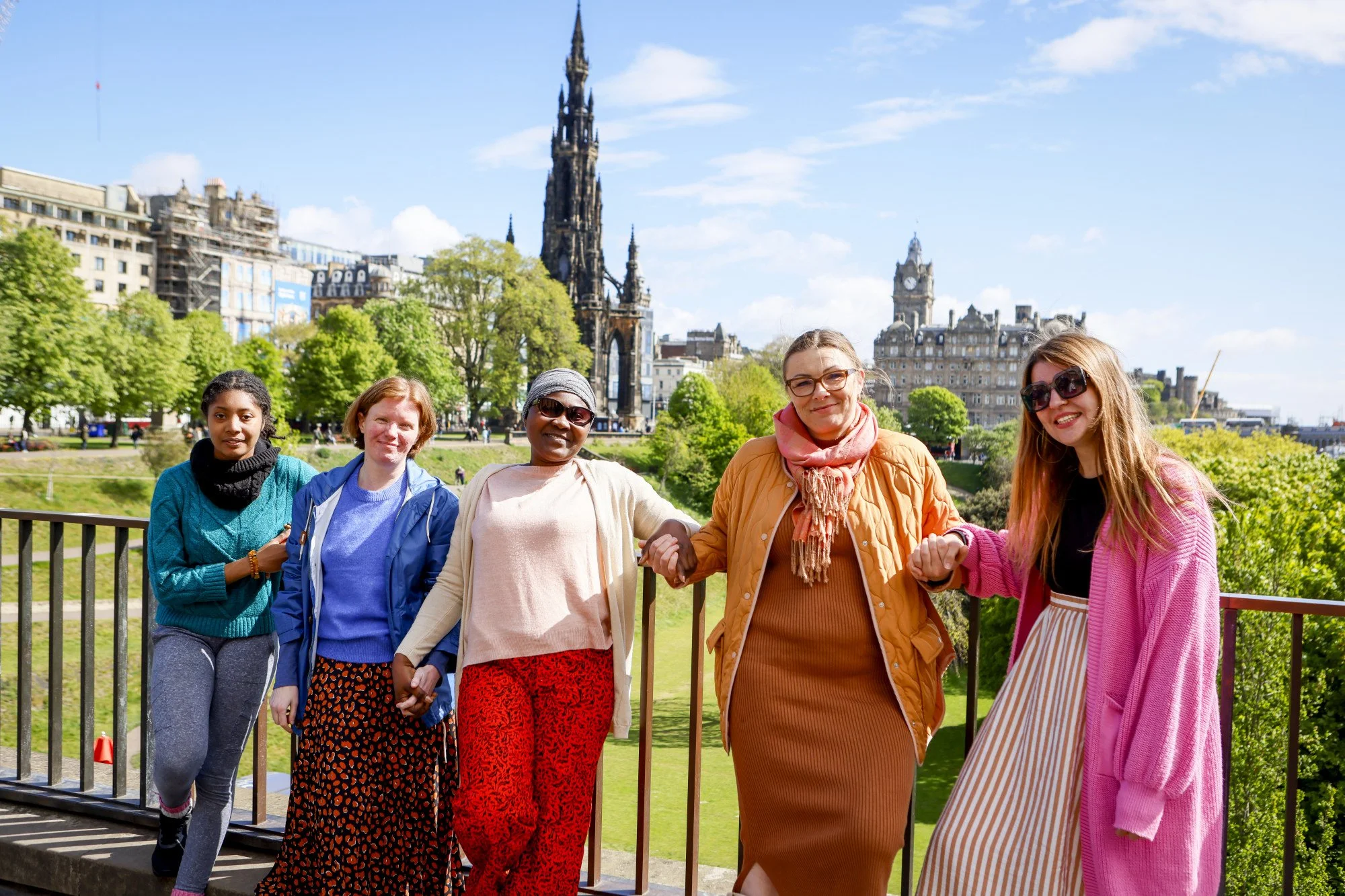
Some of the Edinburgh residents that have been working hard behind the scenes, spotting signals of change that can create a more inclusive and equal city in the future.
We often arrive at big decisions or conclusions that have an impact on others - how we spend our time; who we choose to support; how we use our resources - without being asked if we're ‘qualified’.
Most of these choices are shaped by our life experience, our values and our hopes - we've seen and felt what works and what doesn't, we know deep down what’s right.
So, having worked with 14 Edinburgh residents - the Regenerative Futures Fund decision makers - over the past year, it has been equally fascinating and frustrating to bump into questions from others about their qualification to choose who gets funded.
How could a group of 'regular' people do this? With ten years of funding at stake, are people with little or no experience in grant-making really 'qualified' to make such a big decision?
But these are the wrong questions to ask because the job description for a Regenerative Futures Fund Residents’ Panel Member, written completely with hindsight, turns out to ask for the following:
Real experience - actually living the challenges that we all want see disappear
Regularly feeling the impact of unjust systems that need to change
Committing a year of emotional labour to take a careful deep dive into those systems and learn about the impacts of inequalities on others
An ability to foster trust by regularly spending time and working alongside other group members
The patience to design and re-design alongside the RFF team
Being open and willing to test, learn and use a process that has emerged and changed, including using a consensus decision-making method.
The commitment to use that process during an intense 11 weeks of detailed individual proposal assessment, small group discussion and considering external advice.
An ability to navigate proposals and seek out the heart of an idea.
The tenacity to use multiple lenses to contribute to a decision - including proposal clarity, representation, vision and a possibility of systems change.
And after all of this, and after completing an intensive 3-day, full group decision summit, to still demand yet more deliberation to ensure a rigorous and fair outcome.
So our questions shouldn’t be about peoples’ qualifications, we should be asking do they care enough? Do they have the commitment, kindness and grace needed to become the best team they can be, thinking beyond their own wants and needs and hoping for a better city for everyone?
And, by the way, the answer is yes to all the above.
I keep returning to a line in the poem that the group collectively wrote last summer. '…a city that cares is built from decisions that are found not taken'.
Sure, there will be spreadsheets, slide decks, budgets, diagrams, estimates and reports along the way. But, in the end, the right decision will be found if a group of people are given the time and space to shape an approach that enables it to be found. People who care about each other, care about their communities and are committed to the rigour that this work demands.
Choosing 11 projects from the 97 that originally expressed an interest is a huge achievement. Congratulations, of course, to those who have been funded but let's also recognise the absolutely monumental effort it took to reach the decision, slowly and surely, behind the scenes, while navigating and rearranging busy lives.
Let’s celebrate the new skills that have been discovered, the new-found confidence, the gifts and laughter, the pride felt in the room.
People of Edinburgh, we should all feel lucky to count this group as friends, fellow residents and neighbours.